.svg)

.svg)
.svg)
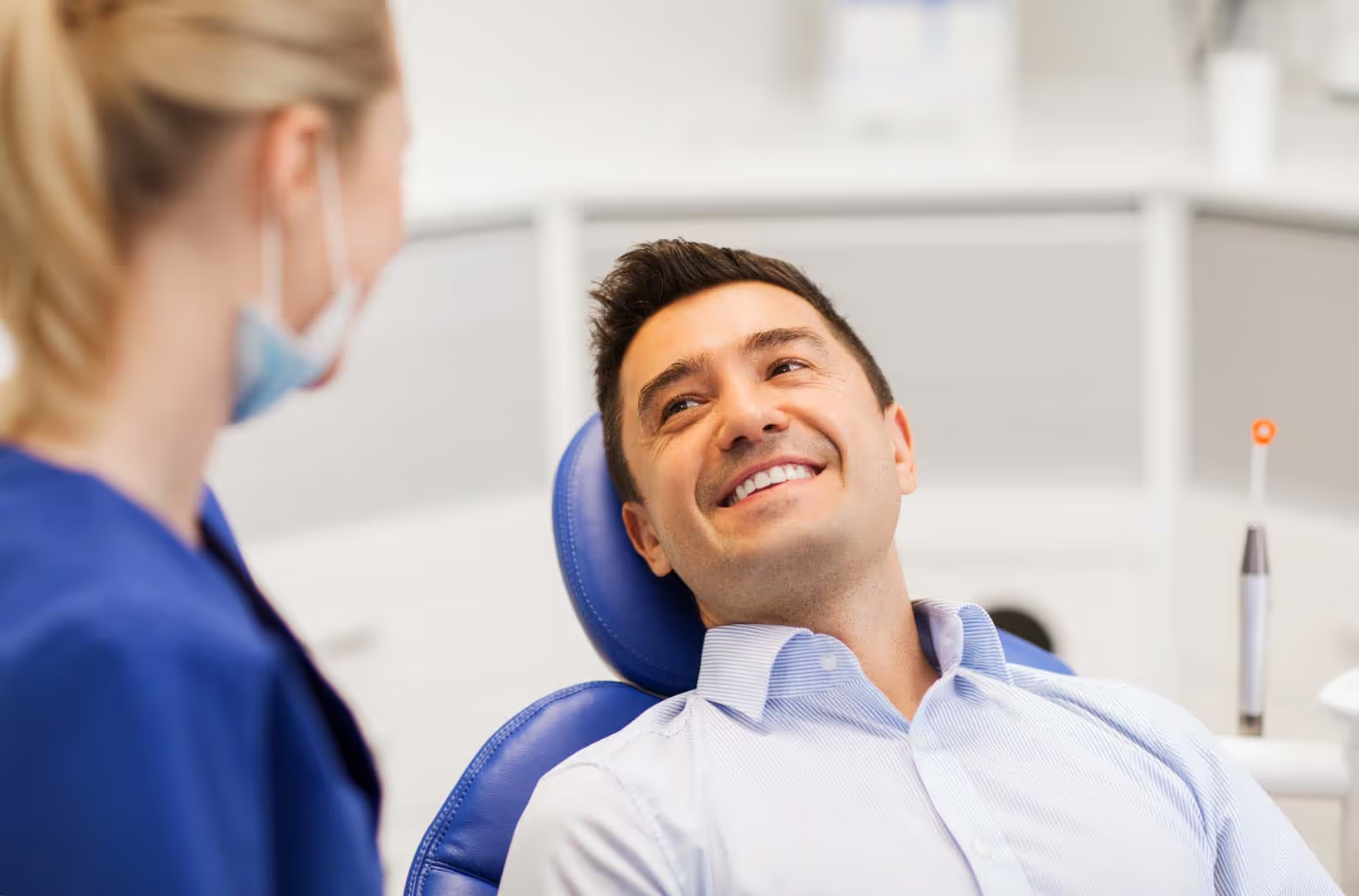

Most people's mental image of a dental visit was formed years ago — and it usually isn't a pleasant one. Messy impressions that made you gag. Guesswork about how a restoration would look. Multiple appointments for a single crown. The vague sense that you were trusting a process you couldn't really see or understand.
That version of dentistry still exists in many practices. But the gap between what's possible today and what most patients have experienced is wider than people realize. The technology behind modern cosmetic and restorative dentistry has changed fundamentally — and when a practice actually invests in it, the difference shows up in ways you can feel from the first visit.
What's Actually Changed
It's easy to dismiss "new dental technology" as a marketing phrase. So rather than speak in generalities, here's what the shift looks like in practice — the specific tools that are changing how care is planned, delivered, and experienced.
Digital scanning has replaced traditional impressions. If you've ever had a mold taken of your teeth, you remember the tray filled with cold putty, the waiting, and the discomfort. Digital intraoral scanners have made that process obsolete. A small wand captures thousands of images of your teeth in minutes, creating a precise 3D model on screen. The result is more accurate than a physical impression, more comfortable for the patient, and immediately available for planning — no waiting for a lab to process a mold.
Same-day restorations are now a reality. Traditional crowns required two appointments: one to prepare the tooth and take impressions, then a return visit weeks later once the lab fabricated the crown. In between, you wore a temporary. CEREC technology has changed that entirely. Using digital scans and in-office milling, a permanent, custom-fit crown can be designed and placed in a single visit — often in about two hours. No temporary. No second appointment. No waiting.
Computer-based diagnostics reveal what exams can't. For patients with TMJ dysfunction, bite issues, or complex restorative needs, technology like computerized jaw tracking and electromyography provides objective data about how the jaw moves, which muscles are strained, and where imbalances exist. This information is invisible during a standard exam. With it, treatment plans for conditions like TMJ disorder can be built on measurement rather than guesswork — and progress can be tracked objectively at every follow-up.
Digital smile design lets you see the result before treatment begins. One of the most significant sources of anxiety in cosmetic dentistry is uncertainty — committing to a procedure without knowing exactly how it will look. Digital design tools allow your dentist to create a visual preview of the expected outcome based on your actual anatomy. For treatments like porcelain veneers or full smile makeovers, this means you can see and approve the direction before any work begins. Some practices are even using tools like Adobe Firefly to generate AI-assisted visuals that help patients understand complex procedures at a glance — turning clinical language into something you can actually picture.
Clear aligners and implants have matured significantly. Clear aligner technology has advanced to the point where it can address a much wider range of alignment issues than early versions could — and patient demand reflects that, with the clear aligner market growing at a compound annual rate of over 31%. Similarly, modern dental implants are more reliable and longer-lasting than ever, in a field projected to reach nearly $9.4 billion globally. These aren't emerging technologies anymore — they're proven solutions that have earned widespread adoption for good reason.
Why Technology Alone Isn't Enough
Here's where it's important to be direct: the tools are only as good as the hands and mind behind them. A CEREC machine doesn't design a beautiful crown by itself. A digital scan doesn't diagnose a bite imbalance. And a smile preview is only as accurate as the clinician's understanding of how form and function work together.
This is why the combination of advanced technology and deep clinical training matters. At The Hills Dental Spa, every piece of technology in the practice is paired with Dr. Kevin Winters' 30-plus years of experience in cosmetic and neuromuscular dentistry. His background as Program Director of the Las Vegas Institute for Advanced Dental Studies means he's not only trained on these systems — he's taught thousands of other dentists how to use them. The technology amplifies expertise. It doesn't replace it.
What ties it all together is a patient-centered approach to care — one where your goals, comfort level, and timeline guide every decision. Technology serves that philosophy. It doesn't drive it.
What This Means If You've Been Putting Off Care
For many adults, avoiding the dentist isn't about neglect — it's about past experience. An uncomfortable procedure, an unexpected outcome, a visit that felt rushed or impersonal. Those experiences accumulate, and eventually the avoidance itself becomes the habit. You're far from alone in this — research suggests roughly 15% of the adult population experiences clinical dental anxiety, and the true number is likely higher when you include people who simply avoid scheduling altogether.
Modern technology directly addresses the most common reasons people delay care:
Concern about discomfort. Digital scanning eliminates the most physically uncomfortable part of many dental visits. Laser-assisted procedures can reduce the need for traditional drills in certain treatments. And precise digital planning means less guesswork during the procedure itself, which often translates to shorter appointments and less post-visit soreness.
Fear of the unknown. When you can see a 3D model of your own teeth on screen, review a digital preview of your expected result, and understand the plan step by step before anything begins — the uncertainty that drives anxiety drops significantly. You're not trusting blindly. You're making an informed decision based on information you can actually see and understand.
Time constraints. Same-day crowns, single-visit whitening, and digitally planned treatment sequences all reduce the number of appointments required. While a standard dental checkup averages 20 to 25 minutes, more involved visits benefit from technology that compresses timelines — what used to take two or three appointments can often be accomplished in one. For busy professionals and parents in the Austin area, fewer visits with more predictable timelines makes dental care easier to fit into real life.
Worry about the result. Digital design and precision fabrication produce results that are more predictable and more consistent than analog methods. When the plan is built from accurate data and the execution is guided by that same data, the gap between expectation and reality narrows considerably.
A Better Starting Point
If it's been a while since you've explored what dental care can look like today, the difference may surprise you. The experience of visiting a practice equipped with current technology — and led by a clinician who knows how to use it — is fundamentally different from what most people remember.
That's especially true for cosmetic dentistry. The combination of digital planning, premium materials, and neuromuscular awareness means today's veneers, crowns, and restorations look more natural, last longer, and function more comfortably than what was possible even a decade ago.
The starting point is always the same: a conversation. No commitment, no pressure — just an honest assessment of where things stand and what's possible from here.
We welcome patients from Austin, West Lake Hills, Rollingwood, Lost Creek, Lakeway, and Bee Cave, TX.
Request an appointment, or call (512) 347-0044.
.avif)
.avif)